
Wednesday, September 23
Croatian National Theatre in Varaždin, Great Concert Hall, 8.00 p.m.

In partnership with the Festival “Musical Evenings at St Donatus”
“La Spedidam est un organisme de gestion collective qui oeuvre afin de garantir aux artistes-interprètes de toutes catégories les droits qui leur ont été reconnu”
Dialogos receives supports from the DRAC Ile-de-France – French Ministry of Culture. “Mécénat Musical Société Générale” is the mail sponsor of Dialogos.
Ensemble Dialogos & Pino De Vittorio
Katarina Livljanić, voice, artistic leadership
Albrecht Maurer, viola da braccio
Norbert Rodenkirchen, flutes
Bor Zuljan, lute
Pino De Vittorio, voice
Ariadne Lives
Ovid in Medieval and Renaissance Italy
Katarina Livljanić i Olivier Lexa, scenario based on Italian translations of Ovid from the 14th to the 16th century: Filippo Ceffi (1325), Domenico da Monticello (cca 1354-1358), Arrigo Simintendi (cca 1334), Lodovico Dolce (1553), Giovanni Andrea dell'Anguillara (1561)
Olivier Lexa, direction
Katarina Livljanić, musical concept and reconstruction
Bor Zuljan, Albrecht Maurer, Norbert Rodenkirchen, instrumental arrangements
Matko Petrić, video
In the new project by the Ensemble Dialogos, past and present meet in a mysterious labyrinth: guided by the sound of her own voice, the singer arrives in an ecstatic space, beyond time. There, she encounters her own voice singing Ovid’s verses penned by Italian medieval poets, and discovers that the voice, much like the soul, travels through time from body to body. In this moment of initiation, she realizes that in one of her past lives she was Ariadne, daughter of Minos, King of Crete, forever trapped by the memory of the Athenian hero Theseus. They met between the sea and the Cretan olive groves and fell in love; she gave him the guiding thread through the labyrinth and helped him defeat the monstrous Minotaur. On the return journey to Athens, at dawn following a night of love on the island of Naxos, Ariadne awakens alone and realizes that Theseus is gone. Where did he go? Why did he abandon her?
Sources
True to its own red thread of reviving forgotten medieval musical worlds, Dialogos creates the scenario for this work based on Italian translations of Ovid’s Heroides and Metamorphoses by 14th-century Tuscan authors—Filippo Ceffi, Arrigo Simintendi, and Domenico da Monticello—as well as later generations of humanists, Giovanni Andrea dell'Anguillara and Lodovico Dolce, who in the 16th century adapted the prose translations of their predecessors into verse. They used the popular ottava rima form, a type of improvised poetry that remains beloved among Italian traditional poets to this day.
Music
In humanist salons and accademie, music was performed in various ensembles, arrangements of madrigals for voice and instrumental accompaniment were presented, and sung poetry was improvised. Cantori al liuto, such as Ippolito Tromboncina—who was mentioned by Lodovico Dolce himself—sang accompanied by the lute or other instruments. For Dolce’s tragedy Troiane, the unpreserved musical intermedii were written by composer Claudio Merulo, then organist at St. Mark’s. Cornelio Frangipane, author of Tragedia (1574), also mentions Merulo’s music in his work, present not only in the intermedii and choruses between dramatic scenes, but even in the declamation of the text for various roles.
Unfortunately, this music has been lost to time; however, surviving forms of sung poetry such as strambotto, giustiniana, and gregesche bear witness to the porous boundaries between Renaissance polyphony and its adaptations into the world of poet-singers in humanist salons and theatrical performances.
Based on the musical sources of the Italian Trecento, the studioli of Florentine humanists fascinated by antiquity, and the improvisational techniques of ottava rima, Katarina Livljanić and Dialogos create a musical piece rich in vocal and instrumental colors. In doing so, they bring before today’s audience the most authentic skill of medieval and humanist musicians: the art of improvisation.
Direction
The direction centers around the bodies of the two lovers and the contrasts created by speech/silence, shadow/light, movement/immobility, tension/relaxation... This dualism leads to a third reality, the eternal reality of myth. In a dialogue between the stage space and video projections, light follows the two lovers through the sensual shadows of chiaroscuro visions.
In this music-theater project, Ovid’s text of the Heroides - love letters from mythological heroines to their lovers - transcends antiquity and becomes a story about our own souls, inviting us on a journey through the intimate labyrinths of our lives.
Ariadne lives - embodied through the charisma of Pino De Vittorio and Katarina Livljanić, in the refined, poetic direction of Olivier Lexa—as a treasure shed of ancient armor and immersed in real life. Our Ariadne is not an artifact of the distant past, just as myths are not relics of bygone times. They - forever - speak of the present. They are proof that life alone is not enough, and that a person is truly alive for only a few hours of their existence.
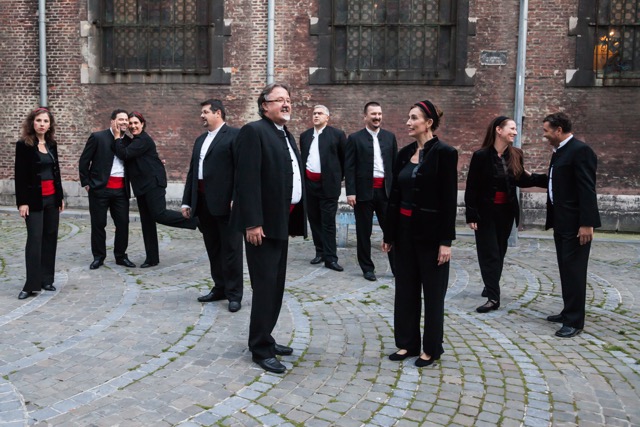
Directed by Katarina Livljanić, singer and musicologist, professor at the Schola Cantorum in Basel, Dialogos explores our relationship to our musical roots. Since 1997, the ensemble brings together singers and instrumentalists from different backgrounds and countries to revive European oral and written traditions, from the Middle Ages to the present day. Through the research of Katarina Livljanić, Dialogos’s programmes allow audiences worldwide to (re)discover unknown repertoires, with a particular interest for the southern Slavic world. The past becomes alive again through musical language based on medieval sources, plainchant, traditional melodies and polyphonies. Profound musicality and contemporary stagings reveal the timeless beauty of these stories that have crossed the centuries. Dialogos has performed in the most prestigious festivals and concert halls worldwide: Boston, Utrecht, Vancouver, Dubrovnik, Sydney, Lincoln Center, the Metropolitan Museum in New York, the Cité de la musique in Paris, Folle Journée de Nantes ... French and international critics acclaimed the ensemble for the creativity of its musical choices, the quality of its interpretations as well as the research that accompanies each new project. Dialogos has received awards such as Diapason d'Or, Choc from Monde de la Musique, 10 of Répertoire, 5 of Goldberg. The CD of Tondal's Vision won the Diapason d´Or of the Year 2004 and the Coup de Coeur of the Académie Charles-Cros. Dialogos is subsidized by the DRAC Île-de-France - Ministry of Culture. The ensemble has been in residence at the Ambronay Cultural Center (2006-2009) and the Royaumont Foundation (2011-2014).
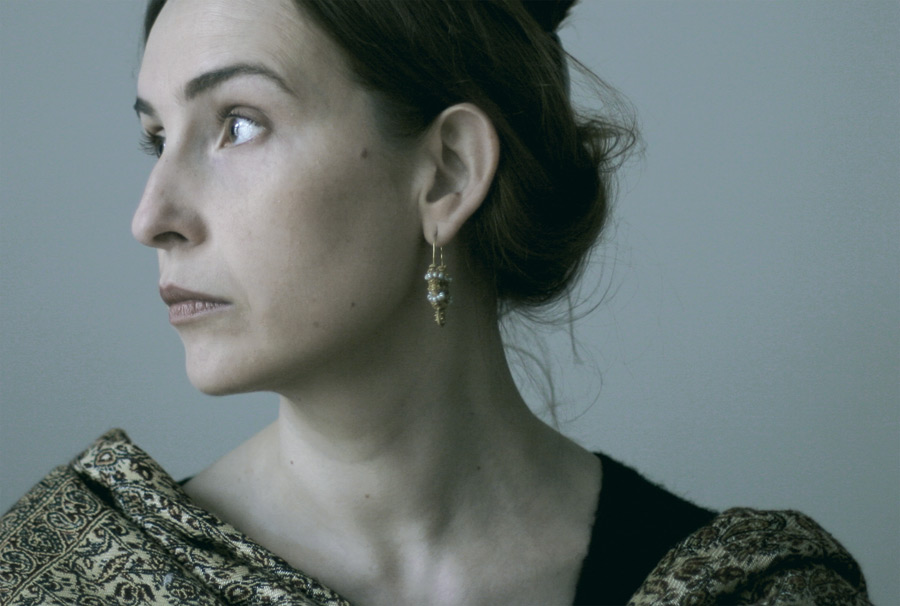
Katarina Livljanić, singer and musicologist, is an international specialist in medieval music and plainchant performance. Born on the Adriatic coast of Croatia, she decided to become a medieval music performer at a very early age, training at the Zagreb Music Conservatory before moving to France to study voice and musicology. She directs the vocal ensemble Dialogos, which she founded, specializing in medieval chant and medieval and renaissance theatre. For her work in this field, she was decorated for cultural achievement in 2002 by the president of Croatia and was awarded the title Chevalier des Arts et des Lettres by the French government in 2016. She obtained a Ph.D. at the École Pratique des Hautes Études in Paris. As a Maître de conférences in medieval music at the Sorbonne University in Paris, she directed a medieval music performance Masters programme for almost twenty years. Since 2019, she has been a voice teacher at the Medieval and Renaissance Department at the Schola Cantorum Basiliensis. She is regularly invited as visiting lecturer or artist in residence at Harvard University (visiting lecturer in 1997, artist in residence in 2003 and Blodgett Artist in Residence in 2011) and had also been invited to numerous universities in Europe, in the United States and Canada (Schola Cantorum Basiliensis, Fondazione Cini, Boston University, Yale) as a teacher or resident artist. With Benjamin Bagby (Sequentia), she has been awarded a Cornille Visiting Professorship at Wellesley College (USA) in 2007. She publishes articles about medieval chant performance in scholarly reviews worldwide and is the author of a volume in the collection the Paléographie Musicale series, founded by the monks of Solesmes in 1889. In 2002 she was a guest artistic advisor at the Early Music Festival in Utrecht, Netherlands and served as co-curator of the festival in 2023. In 2012 she was artist in residence at the Laus Polyphoniae Festival in Antwerpen, Belgium. As a soloist, she performs contemporary repertoire in collaboration with the Croatian pianist Danijel Detoni and the French ensemble Variances, directed by Thierry Pécou. She is also active as a poet and publishes in Croatian literary reviews.
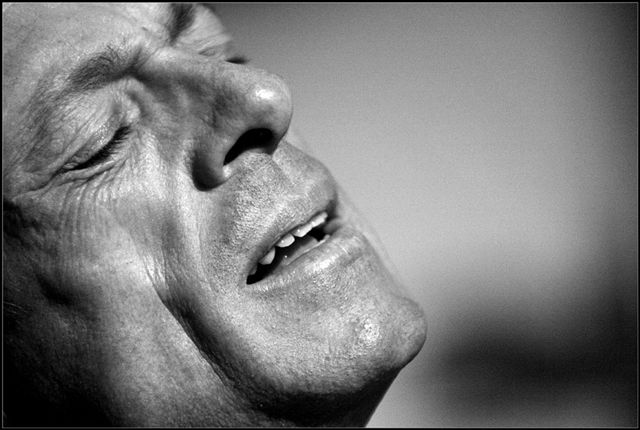
One of the foremost figures in the revival of Italian early music, Pino De Vittorio began his career by exploring the vocal traditions of his native region, Puglia, before joining Roberto De Simone's theatre company. His career has taken him to many of the world's leading opera houses. Following his debut at the Teatro di San Carlo in Naples in Crispino e la comare by the Ricci brothers, the production was subsequently revived at La Fenice in Venice and the Théâtre des Champs-Élysées in Paris. Together with Antonio Florio, he founded the Baroque ensemble Cappella della Pietà de' Turchini, with which he has appeared at numerous international festivals in France, Japan, China, Colombia, Mexico, Argentina, Brazil, Israel, Spain and many other countries. His Baroque operatic repertoire with Antonio Florio includes La colomba ferita (Teatro di San Carlo, Naples; Teatro Massimo, Palermo), La finta cameriera, Pulcinella vendicato (Teatro Bellini, Naples, and Mexico City), Partenope by Leonardo Vinci (Seville, Teatro di San Carlo, Naples, León, Santander and A Coruña) and Ottavia restituita al trono by Domenico Scarlatti (San Sebastián), among many others. In the operatic repertoire, he has performed the role of Arnalta, Poppea's nurse, in Monteverdi's The Coronation of Poppea under the musical direction of Rinaldo Alessandrini and in Robert Wilson's production at the Opéra Garnier in Paris and La Scala in Milan. His extensive discography includes numerous recordings of sacred and secular music with Cappella della Pietà de' Turchini for the labels Symphonia, Opus 111, Naïve, Eloquentia and Glossa. His most recent recordings with Franco Pavan and Laboratorio 600 include Siciliane (Glossa), an album of Calabrian music, and Ninnananna. He has also released La Barca del mio Amore, devoted to the villanelle of Gorzanis, with Ensemble Lyra under the direction of Bor Zuljan.
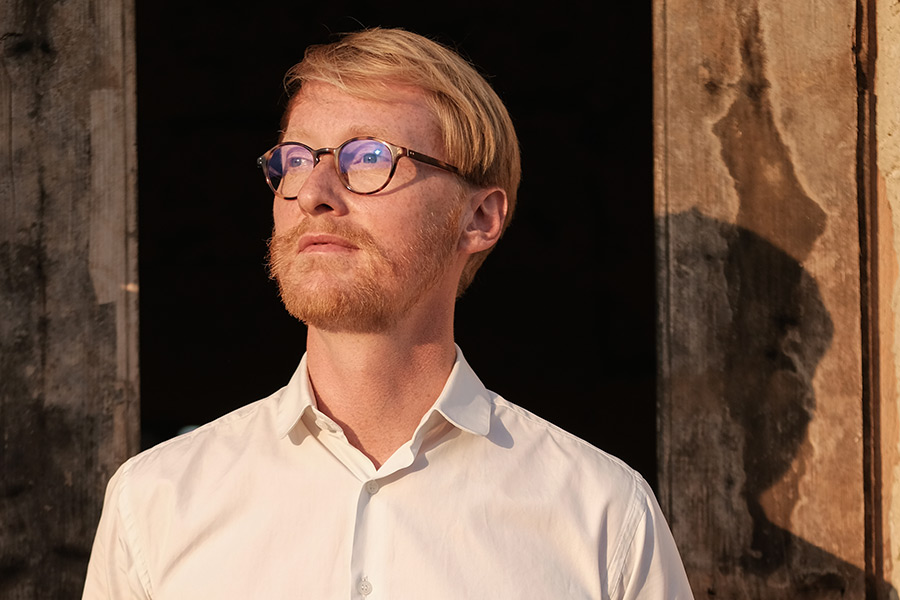
Author and director Olivier Lexa trained as a historian and musician. In 2014, he staged the modern world premiere of Francesco Cavalli's L'Eritrea in a production by Teatro La Fenice, which was unanimously acclaimed by the press. He subsequently directed productions at the Théâtre de la Criée in Marseille, La Monnaie in Brussels, Carnegie Hall in New York, the Warsaw Philharmonic and INDA in Syracuse, while serving as dramaturge for productions at Teatro alla Scala, La Monnaie and the Ballet National de Marseille. His work is distinguished by a resolutely anti-realist and interdisciplinary approach to the stage, new modes of physical expression as well as an insatiable curiosity for new repertoires. Alongside his stage productions, Olivier Lexa served as General Manager of the Palazzetto Bru Zane – Centre for French Romantic Music until 2010. He founded the Venetian Centre for Baroque Music in 2011, serving as its Artistic Director until 2017 under the presidency of Jordi Savall. He then created the Fondazione delle Arti – Venezia and was curator of the cultural programmes of the Museo Nazionale Romano in 2021-2022. He also worked with the French Pavilion at the Venice Biennale, with Christian Boltanski in 2011 and Xavier Veilhan in 2017. Olivier Lexa is also a novelist (Morceaux choisis, 2011; L'Éducation vénitienne, 2016), an essayist (Venise, l'Éveil du baroque, 2011; Francesco Cavalli, 2014; La Musique à Venise, 2015; Monteverdi et Wagner. Penser l'opéra, 2017; Léonard de Vinci et l'invention de l'opéra, 2019), and a translator (Laurent de Médicis, Poésies, 2021).